
Politics
Spain's PM Pedro Sánchez calls snap general election for 29 November
The decision comes after two decrees aimed at relieving the housing crisis were rejected by MPs on Friday
SUR
In the midst of nationwide protests triggered by the housing crisis, Spain's Prime Minister Pedro Sánchez has called a general election for 29 November.
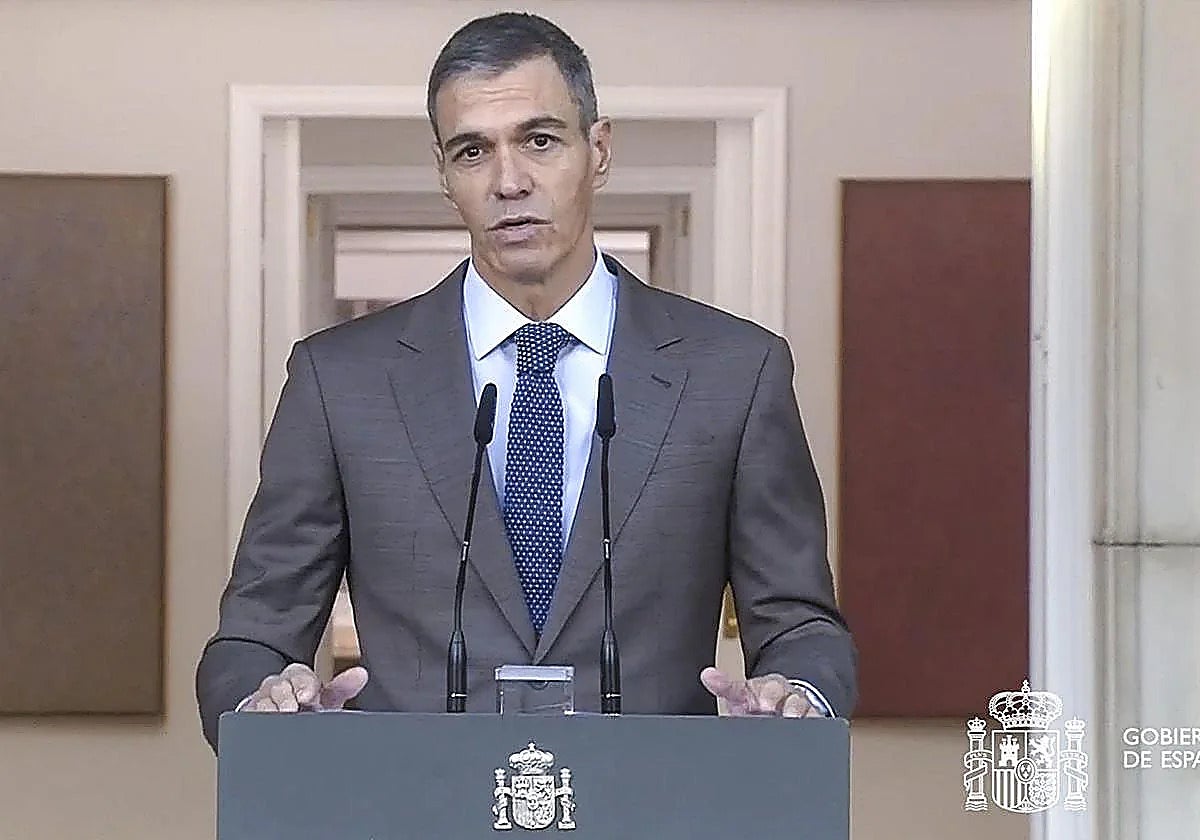
In a statement he on Monday morning Sánchez said that he had already spoken to King Felipe and that Parliament would be dissolved ahead of the November vote.
The decision comes after two royal decrees aimed at improving access to housing and slowing evictions failed to be approved in Congreso on Friday.
Sánchez is the only Spanish prime minister since the dawn of democracy to not have completed a full term.
After a weekend of intense deliberation, Sánchez announced his decision to dissolve Parliament on Monday in a statement delivered on the steps of the Moncloa Palace. He intends to turn the election into a kind of referendum on housing policy.
The prime minister will sign the decree dissolving Parliament later on Monday after an extraordinary Cabinet meeting at 11.30am. What remains to be seen is whether, once Parliament has been dissolved, he will bring the rejected royal decrees back before the chamber, at least the main one.
Sánchez made no reference to the issue in his statement, while sources at Moncloa said only that they would not discuss it at Monday's meeting.
The dissolution of Parliament does not, however, prevent the government from passing emergency legislation, as it technically remains in office until election day. The key difference is that approval would no longer rest with the full chamber but with Diputación Permanente. There, the bloc supporting the measures (PSOE, Sumar, ERC, EH Bildu, PNV and Podemos) has 35 votes, compared with 34 for the opposition bloc (PP, Vox and Junts).
For now, in a speech conceived as the first act of his election campaign, Sánchez limited himself to defending the "bold measures" passed during the parliamentary term. He said he was aware that the "social majority" was outraged to see ordinary people's interests "trampled on in Parliament for the benefit of a few".
The prime minister effectively presented the election as a choice between joining the "far-right wave" or keeping Spain as a "bastion of openness and social justice", against a PP-Vox coalition that, in his view, "has proposed nothing" and whose sole aim is to roll back rights.
Sánchez attacked what he described as "the worst opposition our democratic history has ever known" and accused PP and Vox regional governments of receiving more resources than ever for healthcare, education and housing while, in return, they had "bought penthouses" and "privatised hospitals".
Catalan party Junts, whose vote proved decisive on Friday, went unmentioned by name. At most, Sánchez alluded to a "very hostile" upper house in which many people confuse "reaching agreements with betraying and blocking with winning".
Much of his speech focused on his government's record. Sánchez highlighted an economy which, he said, is growing faster and creating more jobs than any other in the EU, rising purchasing power and falling inequality. He said that his government's results were the best in Spain's democratic history, insisting that this "is not an exaggeration, nor is it an opinion, it is a fact".
He also acknowledged mistakes and admitted that problems remained to be resolved, particularly inequality, public services and housing. He made no mention of the Ceuta crisis or the various legal cases that have dominated the past few months.
In a clear appeal to left-wing voters, Sánchez stated that the reforms needed to address these problems required locals to turn out and give him "a much broader and more progressive majority with which to take on the economic elites" who, he said, "do not stand for election but want to continue controlling the country".
The appeal's aim is not for the PSOE to absorb support from parties further to its left, but to mobilise those voters and sow some doubt among centrist voters who have shifted towards the right in recent years.
Access the broad Spain national news archive
![[]](http://static.vocstatic.com/voc26/latest/assets/images/favicon/surinenglish/apple-touch-icon-57x57.png)